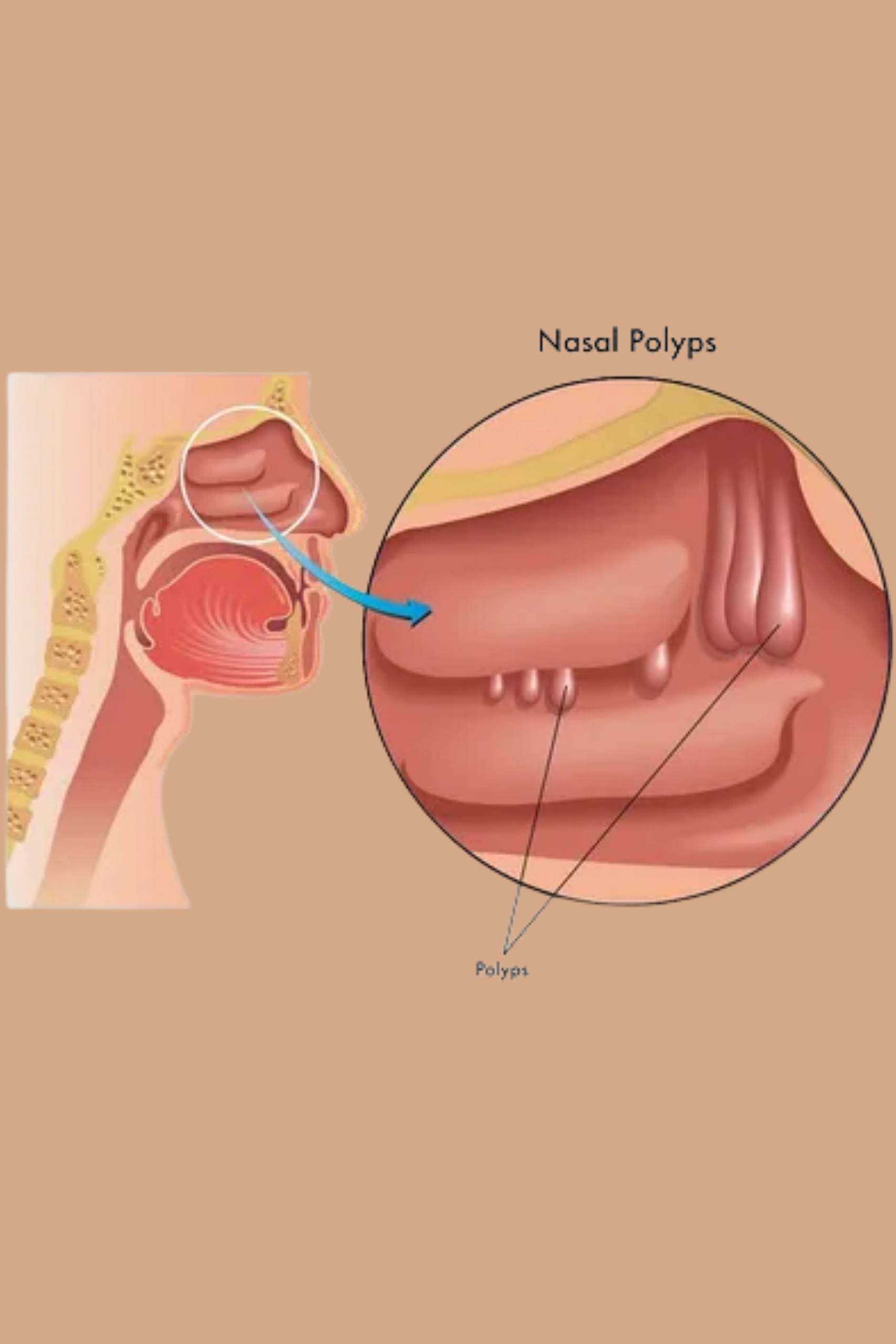
Nasal polyps are swollen tissue masses that develop due to long-term inflammation of the nasal mucosa. This inflammation disrupts the airflow of the sinuses, creating a breeding ground for polyps to grow. Polyps are generally seen symmetrically on both sides of the nose and, while they do not show symptoms when small, they can obstruct the respiratory tract when they grow.
Main causes:
• Chronic sinusitis (sinus inflammation lasting longer than 12 weeks)
• Allergic rhinitis (hay fever)
• Asthma
• Sensitivity to aspirin or NSAIDs (some painkillers) (Samter’s triad: asthma, aspirin sensitivity, and nasal polyps)
• Genetic predisposition
• Immune system diseases such as cystic fibrosis
• Recurrent upper respiratory tract infections
Risk factors:
• Occurs 2-4 times more often in men than in women, and usually appears between the ages of 30-60. Although rare in children, it can be seen in diseases like cystic fibrosis.
• What are the Symptoms of Nasal Polyps?
• Small polyps are often unnoticed. However, when they grow, the following symptoms appear:
• Persistent nasal congestion (need to breathe through the mouth)
• Runny nose or postnasal drip
• Decreased or complete loss of smell and taste (anosmia)
• Pressure, pain, or headache in the face, forehead, and sinuses
• Snoring and sleep apnea
• Frequent sinus infections
These symptoms can be confused with the common cold, but if they last, an ENT specialist should be consulted. If left untreated, it impairs sleep quality, triggers asthma attacks, and in rare cases, leads to complications (e.g., obstructive sleep apnea).